
Moroccan Food in Taghazout: Local Cuisine, Secret Spots & Where Locals Really Eat
Moroccan Food in Taghazout: Local Cuisine, Secret Spots & Where Locals Really Eat
Food is the heartbeat of Morocco. Not as tourism product, but as identity. How people live, what they eat, how they gather around meals: this is Morocco's true culture.
Most visitors experience Moroccan food as tourists: polished restaurants with set menus and English-speaking staff. You get good food, sure. But you miss the real thing.
At Zenno, meals are central to the retreat experience. We've spent years building relationships with local cooks, market vendors, and family-run restaurants. We know where locals actually eat. We know the stories behind the food. And we're excited to share it.
The Foundation: Understanding Moroccan Flavor
Before we show you where to eat, understand *how* Moroccans cook.
Moroccan cuisine isn't complicated: it's *intentional*. Every spice, every ingredient, every technique has a reason. Food is medicine, culture, and connection combined.
The Core Flavors:
The combination creates layers: savory + sweet (dried fruit in tagines), salty + sour (preserved lemon), warm spices, fresh brightness. Every dish is balanced.
The Classics: Dishes You Must Try in Taghazout
Tagine (The Foundation)
A tagine is both a *dish* and a *vessel*. The conical clay pot creates steam circulation that makes meat incredibly tender while keeping vegetables fresh.
Popular versions in Taghazout:
Cost at local restaurants: 50-80 MAD (~$5-8). Cost at tourist restaurants: 100-150 MAD (~$10-15).
Couscous (Friday Tradition)
Friday is couscous day in Morocco. It's cultural law. Families gather, couscous is steamed in a special pot (couscoussière), and meat/vegetables simmer below.
Where to eat it: Any local family restaurant on Friday morning/afternoon. Ask locals "where do families eat Friday couscous?"
Taste: Fluffy grain with rich broth, tender meat, seasonal vegetables. Cost: 50-100 MAD (~$5-10).
Harira (The Soup)
Thick, hearty soup with lamb, lentils, chickpeas, tomato, and spices. It's comfort food. Moroccans eat it to break Ramadan fasts, but it's available year-round in winter.
Best eaten: Winter mornings or evenings. Come with warm bread.
Pastilla (The Party Dish)
Crispy phyllo pastry filled with spiced meat (usually pigeon, but chicken/seafood also common), eggs, and almonds. Dusted with powdered sugar. Sounds weird. Tastes magical: sweet, savory, crispy, tender.
Cost: 40-80 MAD (~$4-8). Make it for special occasions or find it at upscale local restaurants.
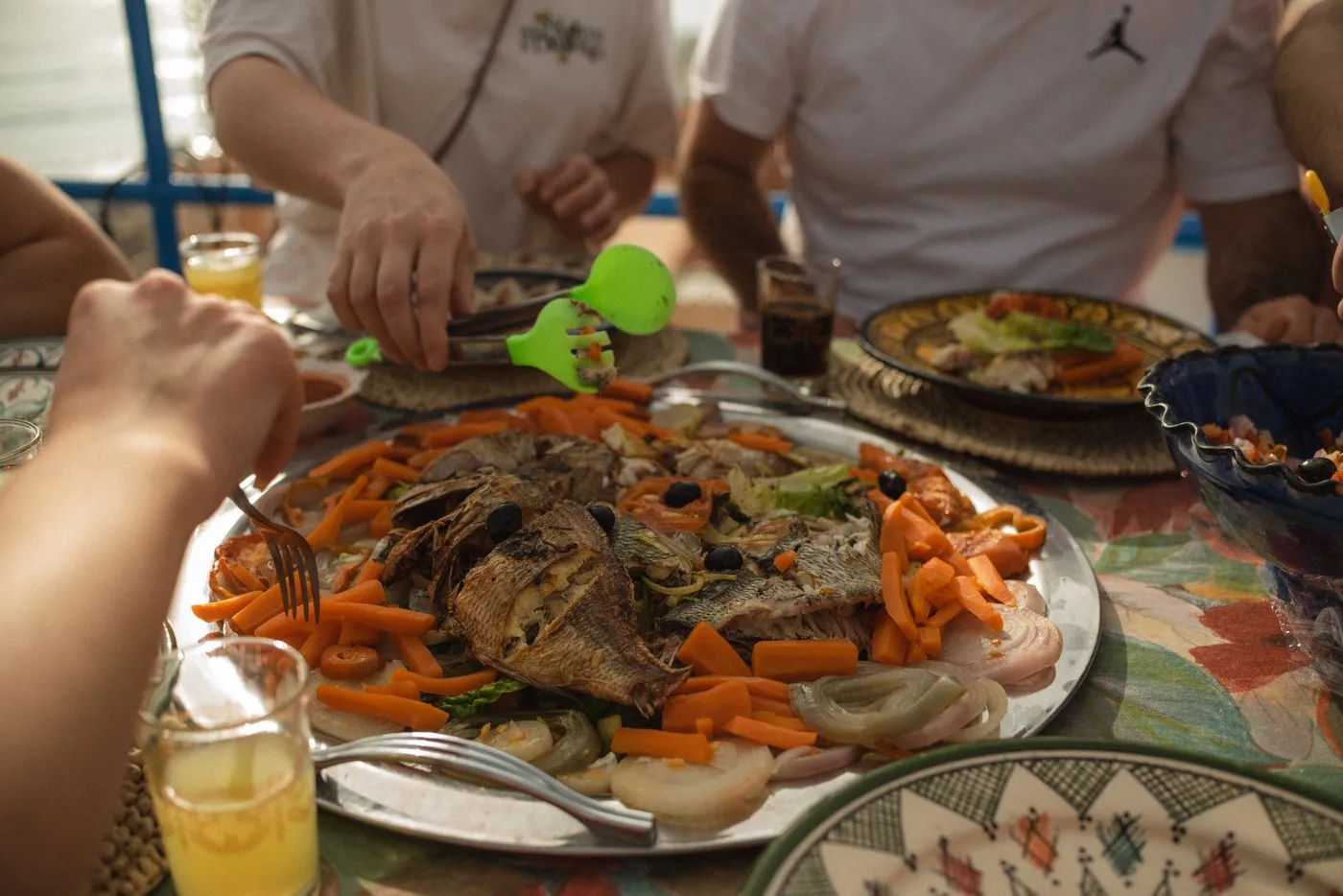
Fresh Grilled Fish (The Coastal Essential)
In Taghazout, fish is caught daily. It's grilled whole with minimal seasoning: just olive oil, lemon, and salt. This is how locals eat fish.
How to get it: Morning fish market (harbor area), pick your fish, have a restaurant grill it (for small fee) or do it yourself if you have access to grill.
Cost: Fish + grilling: 60-100 MAD (~$6-10).
Where Locals Actually Eat in Taghazout
Not recommendations. Actually where Moroccan families go.
Small Local Restaurants (The Hidden Gem)
These aren't on TripAdvisor. No English menus. No tourist decorations. Just Moroccan families eating lunch.
Identifying characteristics:
How to find: Walk away from the main beach area into residential streets. Ask hotel staff.
Market Restaurants (Most Authentic)
Many markets have attached restaurants where locals grab quick meals. The food is what's freshest that day. Extremely cheap, authentic, and delicious.
Harbor Fish Restaurants
Restaurants near the fishing harbor can grill your bought fish, or serve their own daily catch. Prices: 80-150 MAD (~$8-15) for excellent fresh fish with sides.
Café Culture (The Social Experience)
Moroccan cafés aren't loud social hangouts like European cafés. They're quiet, contemplative places for tea, coffee, and small snacks. This is where locals spend time.
Order: "Atay b'nana" (mint tea), "Qahwa" (coffee), or "Msemen" (fried pastry). Cost: 10-20 MAD (~$1-2).
The Food Markets: Your SEO Secret
Morning Fish Market (Harbor)
6-9 AM daily. Fishing boats arrive with catch. Vendors filet, weigh, and sell. This is where freshness begins.
What you'll see: Sardines, mackerel, grouper, squid, octopus, shellfish. Prices fluctuate with catch, but generally: 40-80 MAD per kg (~$4-8).
Pro tip: Arrive early. Best selection goes by 8 AM.
Weekly Vegetable Market (Wednesday)
Wednesday mornings, fresh produce market sets up. Seasonal vegetables, herbs, dried goods. Prices are 40-60% cheaper than store prices.
What's available: Tomatoes, cucumbers, zucchini, peppers, onions, herbs (cilantro, parsley), dried goods.
Pro tip: Chat with vendors. They'll tell you what's freshest or recommend what to cook.
Food Rituals: Understanding Moroccan Eating Culture
Breakfast (Simple)
Bread, butter, honey. Maybe with fresh orange juice or coffee. That's it. Moroccans don't eat heavy breakfasts.
Lunch (The Main Meal)
Usually 1-3 PM. This is the largest meal. Tagine, couscous, or other slow-cooked dishes. Family-centered if possible.
Dinner (Light)
Usually 8-9 PM. Left-over lunch or simple soup/bread. Smaller portions, nothing heavy.
Tea Culture (The Constant)
Mint tea appears multiple times daily. It's social currency. When visiting someone, tea is offered. When meeting business contacts, tea appears. It's more than a drink: it's a ritual.
Preparation: Fresh mint leaves + sugar + hot water. Sometimes with pine nuts. Served in small glasses, sipped slowly, savored.
At Zenno: How We Approach Food
Meals are included in our packages. We work with local families and markets to ensure authentic, fresh ingredients. Breakfast is simple traditional Moroccan. Lunch and dinner rotate between tagines, fresh fish, vegetable dishes, and couscous: always with traditional preparation.
Our philosophy: You eat the way locals do. This means:
Many guests say the food quality at Zenno is better than 5-star restaurants, and costs less. Why? Because we're not marking up tourist prices. We're buying directly from markets and families. We're cooking with intention, not speed.
Learning to Cook: DIY Moroccan Food
Want to cook Moroccan at home? Start here.
Basic Tagine Recipe (Chicken with Preserved Lemon)
Ingredients:
Method:
1. Heat olive oil in large pot/tagine
2. Brown chicken on all sides (5 min)
3. Remove chicken, sauté onions & garlic until soft
4. Add ginger, turmeric, cumin (cook 1 min until fragrant)
5. Return chicken to pot
6. Add preserved lemons, olives, cilantro
7. Cover, reduce heat to low
8. Simmer 45-60 minutes until chicken is tender
9. Taste, adjust salt/pepper
10. Serve over couscous or rice
Cost per serving: $3-5
Preserving Lemons (DIY)
This takes time (3-4 weeks) but is essential for Moroccan cooking:
1. Wash lemons thoroughly
2. Cut in quarters (leave attached at bottom)
3. Pack salt inside each lemon
4. Layer in jar with more salt between lemons
5. Press down firmly
6. Cover with lemon juice
7. Seal, leave at room temperature for 3-4 weeks
8. Use as needed (they preserve indefinitely)
FAQ: Your Moroccan Food Questions Answered
Q: Is Moroccan food spicy (as in hot/spicy)?
A: No. Moroccan cuisine uses warm spices (cinnamon, cumin, ginger) but not chili heat. Dishes are flavorful, not fiery. Very different from Indian or Thai spicy.
Q: Is Moroccan food vegetarian-friendly?
A: Yes. Vegetable tagines, couscous with vegetables, bean dishes, bread, and olive products are all vegetarian. Many Moroccan families don't eat meat daily anyway.
Q: What if I have food allergies?
A: At Zenno, we accommodate allergies completely. We know ingredients, know our suppliers, and can prepare separately if needed. At local restaurants, communicate clearly (use translation if needed) about allergies.
Q: Why is argan oil so expensive?
A: Argan trees only grow in Morocco. Oil comes from small kernels inside hard nuts. Traditional extraction is labor-intensive (though modernizing). Real argan oil is legitimately expensive. Cheap "argan oil" is often fake. Buy from legitimate cooperatives.
Q: Can I buy ingredients to cook at home?
A: Yes. Markets have everything. Preserved lemons, argan oil, spices, preserved ingredients. Much cheaper than buying international versions elsewhere.
Q: Is it safe to eat from street vendors?
A: Generally safe. Look for busy stalls (high turnover = fresh food). Avoid items that have been sitting. Trust your instincts. Your biggest risk is stomach adjustment (new bacteria), not food poisoning.
Q: What's the difference between Moroccan and other North African cuisines?
A: Moroccan emphasizes preserved ingredients, slow cooking, sweet-savory combinations, and specific spice blends. Tunisian food is spicier. Algerian emphasizes bread and legumes more. Moroccan is unique in its balance of flavors.
Q: Where can I learn to cook Moroccan food?
A: Our Zenno retreats include optional cooking classes where you learn from local chefs. You shop markets, cook traditional dishes, and eat together. It's one of the most popular retreat activities. Also: cooking classes available from independent instructors in Taghazout, or YouTube has excellent Moroccan cooking channels.
Take Moroccan Home
The best souvenir from Taghazout isn't crafts or textiles. It's food memory. The taste of tagine eaten overlooking the ocean. Fresh fish that morning. Mint tea ritual with new friends.
Experience authentic Moroccan food properly. Not as a tourist activity, but as part of immersion. Eat where locals eat. Learn what goes into dishes. Understand the culture through its cuisine.
Join our Zenno retreat. Every meal is authentic. Every ingredient is local. Every experience is intentional. Book your culinary journey in Taghazout.